
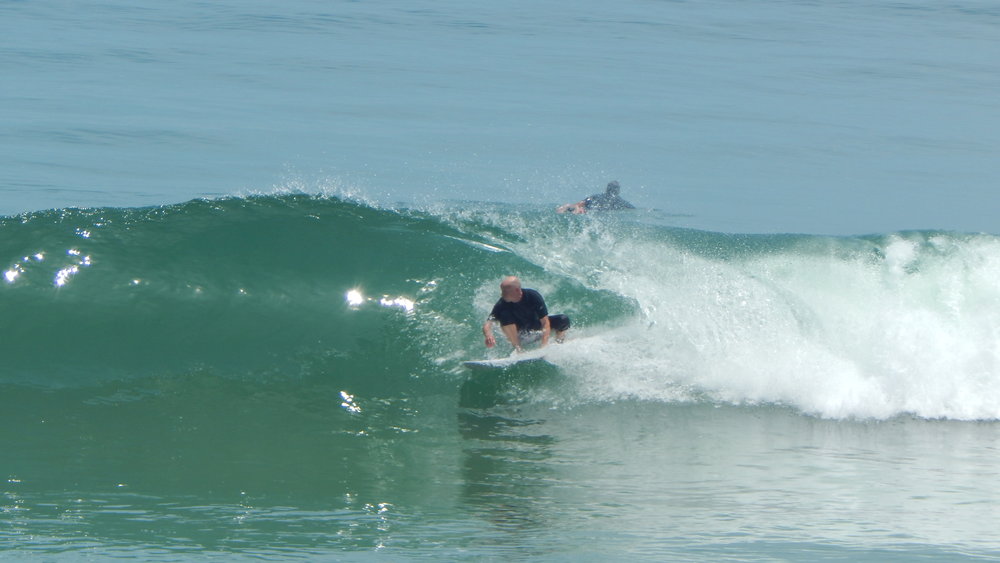
The author preparing to carve a frothy gash.
This is a guest blog post by Vaughan Heilman, an accomplished polymath I have known for almost twenty years. He’s an extraordinary musician, a prolific reader, and when he gets into something, it’s game over. I’m thrilled to have him contribute to the Polyblog.
Some advice on how to ride and care for your first short-ish board
For those of you looking to move down from your longboard or mini-mal (hybrid), here are some things that I’ve had to learn from experience after my recent transition into the world of shortboarding.
I chose the Epoxy/Modern Tech route with my step downs as I don’t have any dog in the fight for the PU (polyurethane) vs. Epoxy debate. I just wanted a light board that was a little more durable at a reasonable cost. You will need to make your own decision and there are some strong opinions out there on these tech options.
There are a jillion videos and articles on picking the best board for your ability and wave, so what I’m going to focus on here is how to set up and take care of your board, and how to prepare for some of the changes in performance.
Board Set Up and Care
First things first, get your wallet back out. Just buying the board doesn’t mean that there aren’t a few other items needed. Here are some things I recommend you get immediately.
1) Get a day bag or at least a sock for your board.
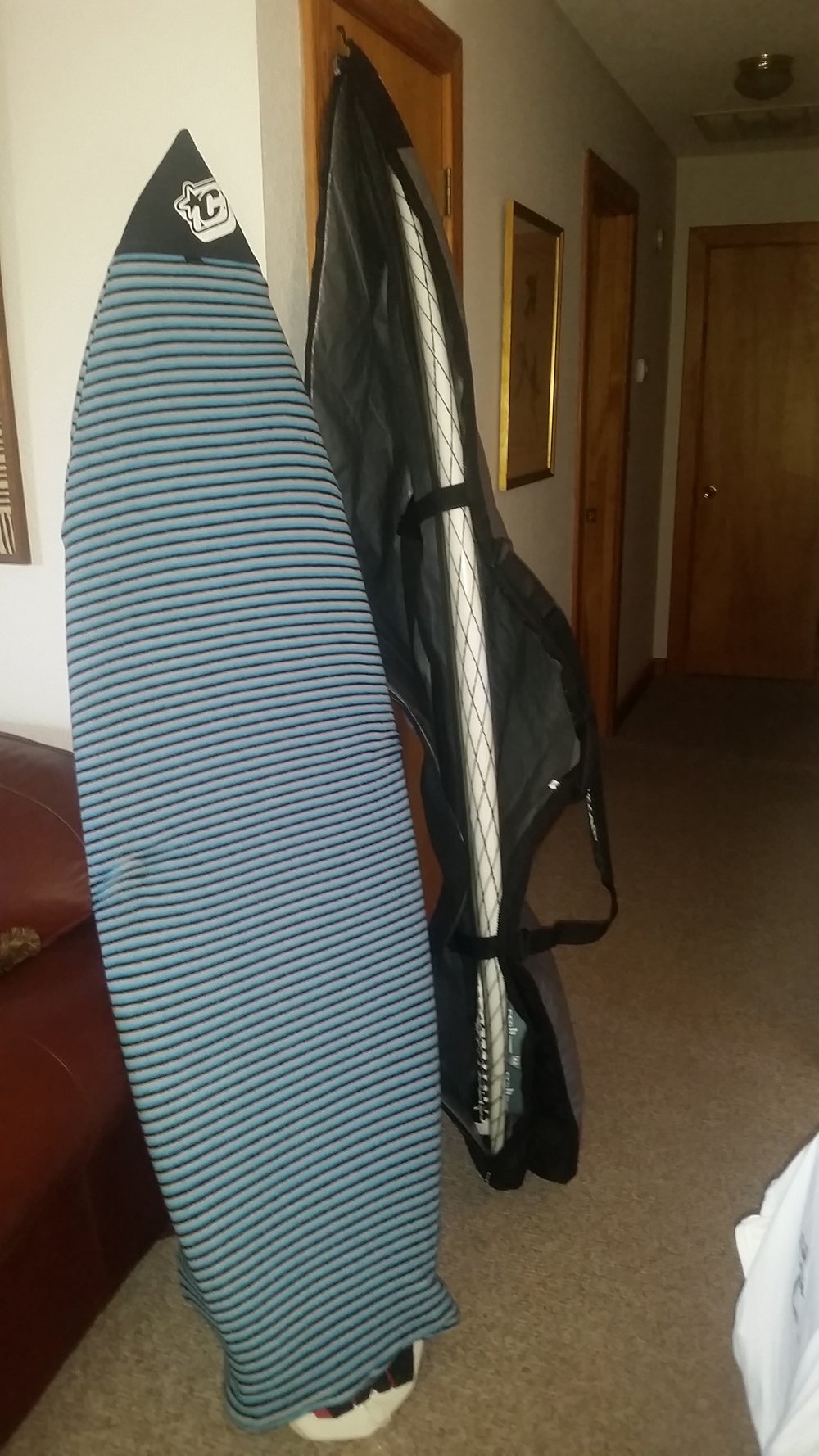
Because non-surfing dings are unacceptable.
Protect your board! All boards will eventually ding… but dings are only acceptable when you are surfing the board. After you get home from your sessions, ensure you let the bag and board dry out. Don’t leave them locked up for days after surfing or mildew and corrosion can occur.
Also, do not leave your board in the sun or a hot car. Epoxy boards are made with foam that has a higher air % than PU boards. This means more air to expand in heat, so keep it covered and cool. If your board is colored, this is even more important.
When you do eventually get that first ding, get out of the water immediately. The added air percentage of the foam (EPS) used in Epoxy boards will act like a sponge. When it comes to fixing a ding yourself, ensure you get Epoxy specific ding repair kits, as PU ding repair will melt your Epoxy board. When in doubt, take it in for repair!
2) Get a tail pad.
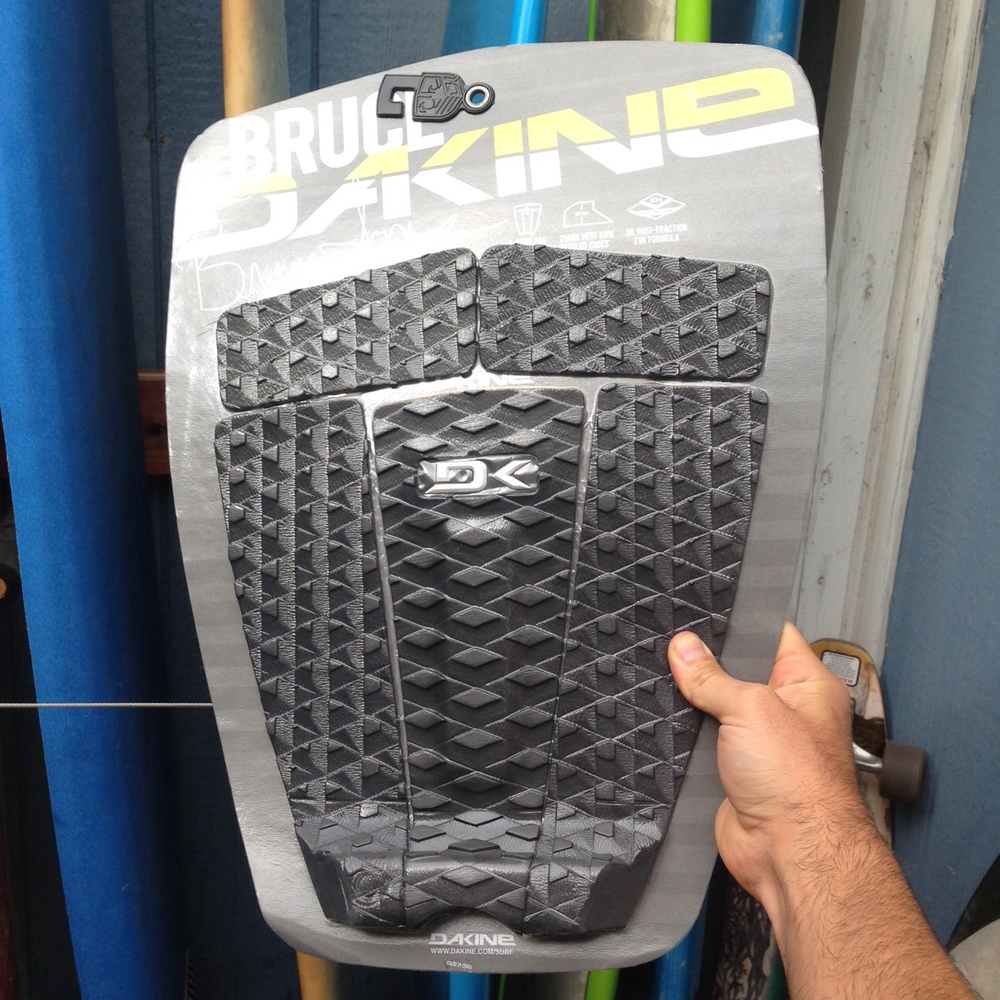
For your board, not that hole in your jeans.
I was originally under the impression these things were for punters who went for airs on every wave. But there are several helpful things that a tail pad does for someone new to a performance geared board.
A tail pad helps minimize pressure dings on the deck from your back foot and knees. Tail pads also help with duck diving (something else for you to research). You are looking for a pad with enough area for your board, like a 3 or 5 piece that can be spread and a good kick-up in the back (15-25mm). You will use the kick-up as a leverage point for your toe when pushing the board through a duck dive.
Most importantly, a tail pad will help you with reference to your back foot position without having to take your eyes off the wave. When applying the pad, get the kick-up to start behind the middle of the back fin or further back if your board shape and leash plug allow. You just don’t want the pad to get too close to the rails or cover the leash plug.
3) Get a leash that is the correct size for the board.
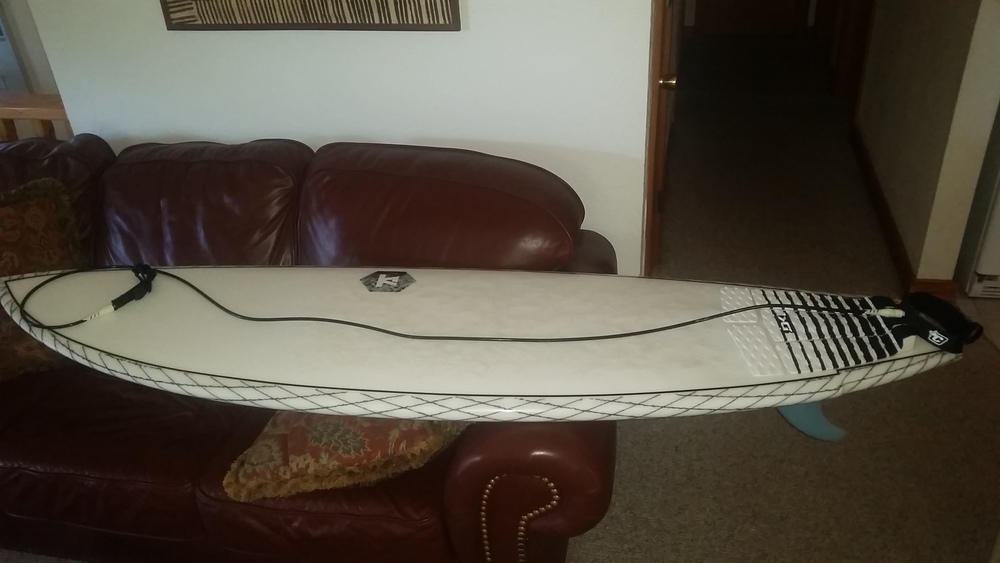
The author’s other surf rack.
You can use your longboard leash, but it’s gonna be a lot of spaghetti in the water and may get caught in your feet or on seaweed (happened to me at Leo Carrillo in CA). Your leash should be at least as long as the board or 6 inches longer. Don’t go short as you put yourself at risk of getting hit by the board when you wipeout.
Spend some money on a good leash and buy a brand name (Creatures of Leisure, Dakine, etc…) as they will tangle less, have comfortable and safe leg straps, and are maximum strength to minimum diameter for less drag.
4) Get some decent fins.
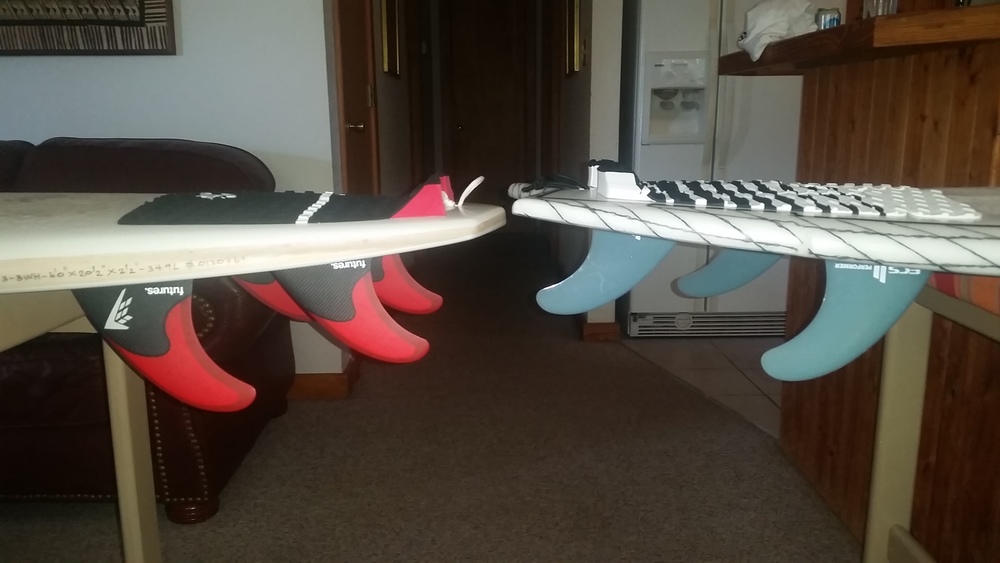
So much potential right here.
Unless you bought a high-end board or got a really good used one your fins are most likely cheap plastic ‘freebies’ that come with most Epoxy boards. These fins will work, but they will be a hindrance to your ability to learning how to use a thruster fin set up.
A good all-around fin should be stiff through the base with some flex to the tip. The free fins have little to no flex and will make the learning curve a little steeper.
Fins can be pricy, but you can also search for good used ones or some lesser name brand items (Punt Surf, Nemesis). Anything is pretty much better than the typical included fin.
Surfing Your Board
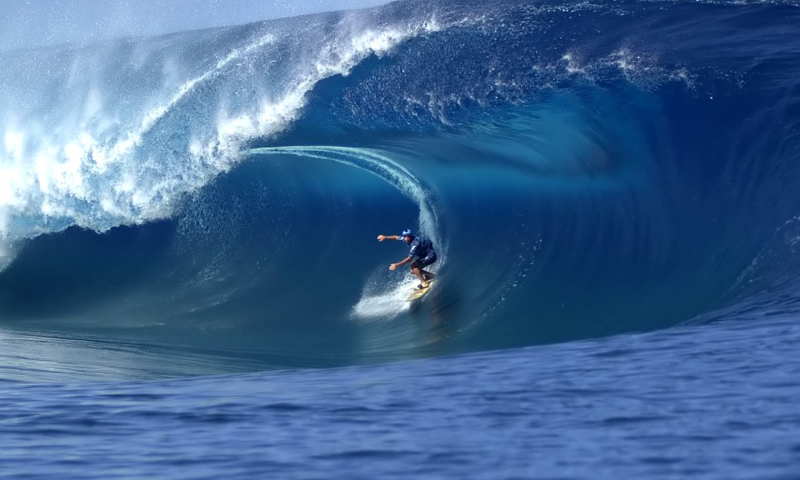
This could be you after reading this article.
Now let’s put the wallet away and start surfing this thing. Know that this board will feel different in a variety of ways and you will flail and struggle at first. All you’ve learned with the longboard is helpful, but you will have to change your mentality on a few things in order to successfully ride the new board to its potential.
Paddling and taking off on a shorter board is going to feel clumsy and a bit intimidating.
When you first paddle out, it’s going to feel like the board is sinking under you and you don’t have that ‘on top of the water’ feel that you had with your longer board.
Longer boards benefit from both higher volume and a longer profile which allows the board to plane and carry a lot of inertia. You’ll notice this when you stop paddling and your board continues to glide for a while, whereas a shorter board will just stop almost immediately.
You’re going to have to change your paddle-in from a gradual increase in speed to a short sprint.
The challenge here is keeping the board controlled under your chest while trying to paddle at top speed. You will eventually feel the control you can exert with subtle chest, ab, and hip movements that will allow you to steer the board a bit.
If your board is short enough, you can kick when the wave picks up behind you to add a touch of extra speed, but know that kicking on flat water is pointless: you have to have some wave behind you to get any real benefit.
The real intimidation aspect comes in with the take-off.
You are going to have to take off much later than you’ve been doing. You cannot catch a ‘boat wake’ with a shorter board. You have to position yourself near the breaking part of the wave and have a quick pop-up to get down the line.
I was often sitting too far outside because it made me nervous to be right in the impact zone. Expect to miss a bunch of waves as you get used to what you can/cannot get into. Some waves aren’t going to be ridden by a shorter board so leave ‘em. When you do pop up, there is a direct translation from your past longboard experience–it’s just all a lot faster and steeper.
I’ve found it helps to keep my head down with my chin right on the deck when going full paddle for a wave. The added weight of my nog helps trim the board down the face a bit, giving me an extra second or two to pop up.
Again, you will wipe out… a lot. For those of us who surf sand bars, we are all familiar with standing up just a bit too soon, getting hung on the lip, then being thrown out over the falls. If you are on a point break, this will be a tad easier.
Also, you will be sore after paddling a shorter board! Expect a few sessions before your fast-twitch muscles get used to the new paddling speed bursts and physical requirements of maneuvering a smaller board.
I noticed a great difference in my power and stamina after 3-4 sessions. Some of this is improvement in technique making the whole paddle-in/take-off processes more efficient (and effective).
Hopefully you’ve made it through the pop up and are now heading down the line.
On your longboard, you’ll typically be trimming towards the middle of the board for speed, occasionally stepping back to make a turn, maybe even getting a pinky toe over the nose if you’re lucky.
Longboards allow for flowing, fast, down the line planning because their flat rocker and single fin produce little drag. You can literally stand dead still on a longboard and still cruise down the line with plenty of speed. If you were to stand up dead straight on a thruster board the board would feel draggy, and may even fall out of the wave.
Here’s where it gets tough to get your head around a thruster system and how you are supposed to surf it: riding a thruster means always thinking about turning, or at least doing rail to rail pumps down the line.
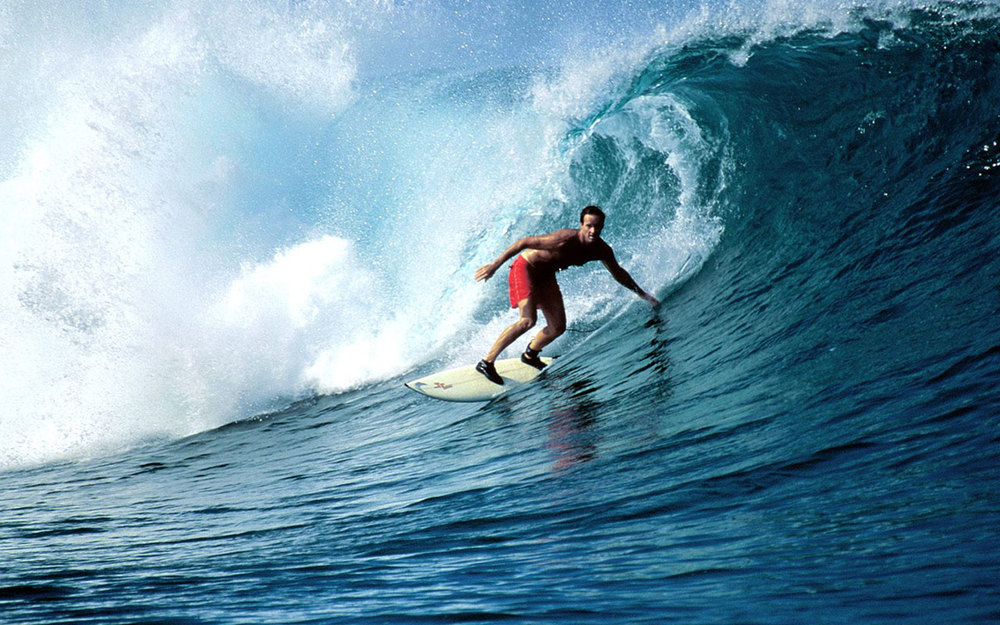
The basic physics behind a thruster set up is that the board is faster on a rail than when flat. Not only do you have more fins in the water, but the two front fins are slightly canted inwards. This will cause more drag if you ride it flat and straight. However, when turning on a rail the board frees up and tracks smoothly through the curve of the turn.
The real key to a thruster is what happens after the turn.
Provided you have a good set of fins, the board should accelerate out of turns when you apply good back-foot pressure. This happens in part due to board flex and shape, but a lot of it is the fins themselves flexing back against the pressure you put on them.
Your stance should be a bit wider than your shoulders and your back foot should almost always be on the pad. The tail pad has helped me out a lot here as I was finding myself standing towards the middle of my board as my longboard experience told me this was the fastest place to be.
Once I started to focus on having my back foot on the pad, the board sprang to life and I was able to keep and make speed. If you are doing it right, you will feel the speed of the board accelerate as you pump, slightly decelerate as you straighten or flatten the board, then spring out of the turn with speed to make your next move.
After more practice, you’ll know when to pump through a section and where to eyeball a spot on the face to make a good carve or turn.
Resources
There are tons of other topics and recommendations for the beginner surfer looking to move into performance gear. Simple searches on Google and YouTube are great places to start if you want info on fins, board designs, techniques, differences in wave types, and so on.
Specifically helpful to me were Shred Show, SurfScience, and the forums on Surfline. If you really need a guru, get down to your surf shop. I’ve just found they are far more helpful when you come in with an educated question versus, “How do I surf good and stuff?”
About the Author
As a kid, I had the privilege of spending 3 months every summer surfing in the Outer Banks of North Carolina until about age 15. The rest of my life was spent landlocked in Dallas or Austin, Texas, until I moved back over here last winter at the age of 40.
I’m in good physical condition and have taken surf trips in the past to appease my stoke requirements, but mainly rode longboards and an occasional funboard.
Now that I get to surf almost daily, I’ve moved up in skill level and paddle ability pretty quickly and have progressed through a custom PU 9’2 Performance Longboard, a 7’0 Modern Blackfish as my first step down board, a 6’6 7S SuperFish as my down the line speeder, and have just gotten a 6’0 Firewire Spitfire to rip with.
You can drop me a line at heilmanv@gmail.com.